THE SURREALIST: MANIFESTO
Galesburg, where nothing happens but the wallpaper.

How many surrealists can you get into a Mini?
A bucket of custard.
I don’t know when I first became interested in Surrealism: on one level, the answer is “never”. I went to the Tate Gallery’s Salvador Dali exhibition when I was 19 and loved it: but that was it, for the next twenty years or so. I never sought out any of Buñuel’s movies (big mistake) or read any manifestos (not so much a big mistake). I liked Surrealism but didn’t really progress past the floppy watch stage.
What I did love, though, was surreal humour. I was fond of some conventional comedies – David Nobbs’ Fall And Rise of Reginald Perrin (then again, hippo), Clement and LaFrenais’ Porridge, John Cleese and Connie Booth’s Fawlty Towers - but I preferred the weird stuff. Specifically the Goons.
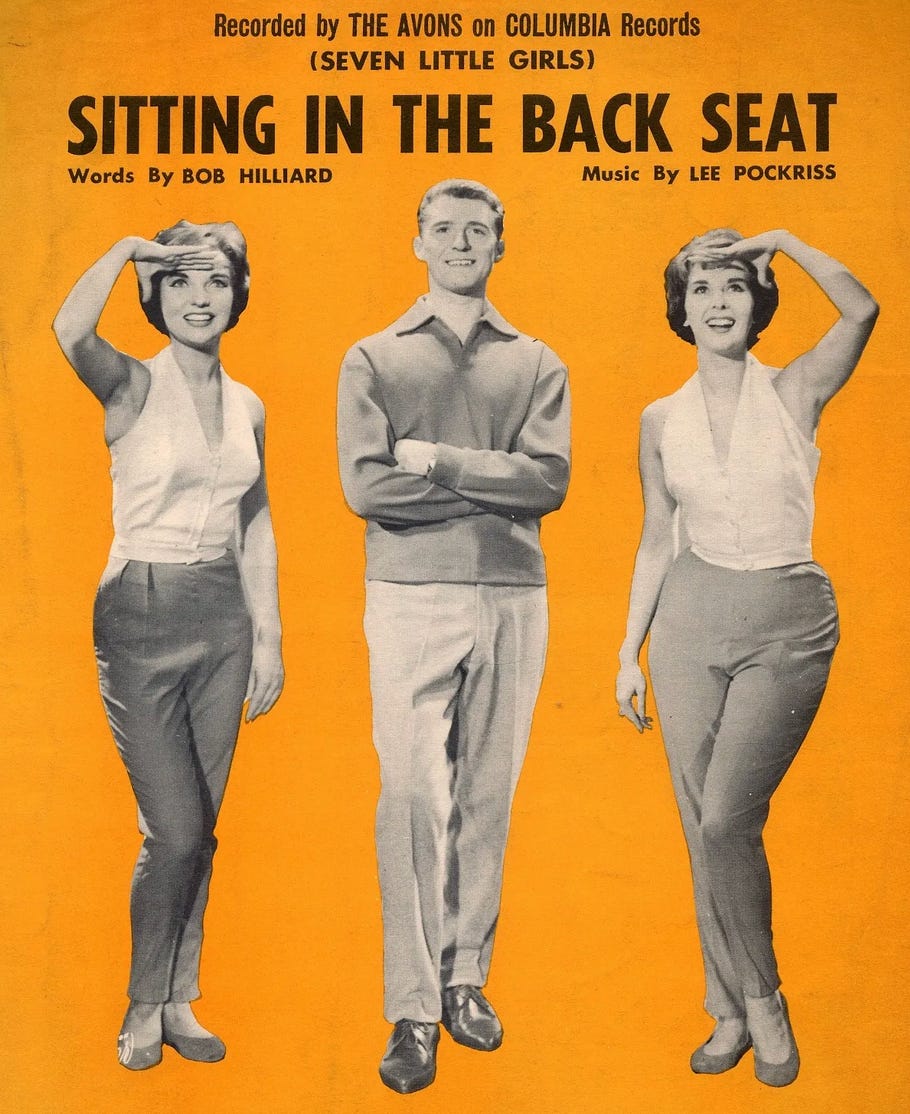
In 196something my parents got their first record player, a red Dansette, from our neighbours Pam and Tony, who threw in a small rack of records. I can still remember some of them: 45s of Itsy Bitsy Teenie Weenie Yellow Polka Dot Bikini (the original by Brian Hyland, not the Timmy Mallett version) and the equally longly-named Seven Little Girls Sitting In The Back Seat (Hugging And A Kissing With Fred) by, I think, the Avons, and some albums: most notably The Best Of The Goon Shows Vol. 1 and The Best Of The Goon Shows Vol. 2.
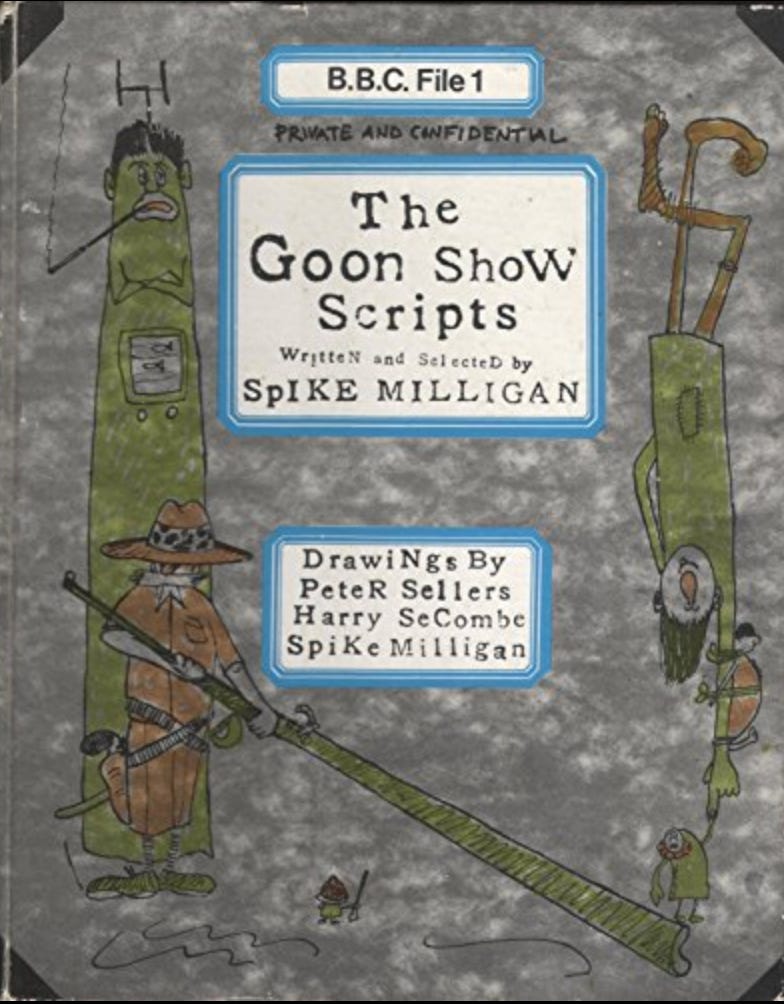
It was those last two records that changed my life. I mean that literally: they were revelatory, the benchmark for everything. Never mind that the Goons had gone off the air in 1960, these albums were breath-taking. In 1973 I bought the collected Goon Show scripts. I read all the Spike Milligan books I could find – I loved Puckoon, the poetry not so much – and I nearly exploded when the BBC screened The Bed-Sitting Room, the best movie about nuclear war ever made.
I was such a Goons fan that when Monty Python came into my life, I was a bit snooty about them. I didn’t at that time know that the Pythons were mortal scared of Spike Milligan stealing their thunder, nor indeed that he had done so with his solo sketch show Q5 (Michael Palin’s reaction – “I thought that’s what we were going to do” – mirroring Neil Tennant’s on hearing Blue Monday by New Order – “I nearly burst into tears”). I didn’t know anything, especially who Reginald Maudling was (Home Secretary, he was in a lot of Python sketches, probably because of his name). What I did know was that Python were doing something similar to the Goons, only more violently and, in my young opinion, not as well. Part of this opinion was to do with the lightning-fast Milligan mind versus the yes-we-get-it spiral of absurdity that Python specialised in.
Compare if you will something like the slow explosive build-up of The Parrot Sketch to this exchange:
SEAGOON: Well, gentlemen, I’ve read the meter… One and six please.
GRYTPYPE-THYNNE: Right. Here’s a photograph of two shillings.
SEAGOON: Thank you. And here’s a photograph of sixpence - change.
And consider this : where the Goons’ jokes were funniest the first time you heard them, Python sketches got more laughs the fourth or fifth time (Discuss). If The Goons were my Beatles, then Monty Python were Led Zeppelin (no singles).
There were other surrealists in comedy: in books, I discovered Caryl Brahms and SJ Simon (who I wrote about for the Neglected Books website here). Later I came across the genius playwright NF “Wally” Simpson, who was a cross between Spike Milligan and Albert Camus and was a huge and unacknowledged influence on both Beyond The Fringe and the Pythons (my documentary about Wally is here). And then there was the 80s, bookended by, at one end The Young Ones and at the other by Reeves and Mortimer (who single-handedly brought surreal comedy back to life).
By this point I was writing comedy, firstly by stealth in the NME (my “Suede In Residence” parody is still not talked of in hushed or indeed any whispers), then with the brilliant Steven Wells (Ride the Lizard) and, thanks to that column, the chance to write for Armando Iannucci and Chris Morris, with Swells and then the great Jane Bussmann. And even though a lot of what I did was regular comedy, the fun stuff was the surrealist stuff (I invite you to listen to our show Bussmann and Quantick King-Size, which is both nuts and the nuts).
As time went on, I became drawn to the “proper” surrealists: I watched some Buñuel, and I discovered painters like Remedios Varo and Dorothea Tanning (source of the Galesburg quote above) and Leonora Carringon, painters who were also brilliant writers: and I even wrote a novel called The Hyena, about a surrealist painter called Deborah Parkinson (whose name I took from an unlikely source). And I produced my own surrealist manifesto, which is very short:
Surrealism is the best art form for describing life because it describes the world the way it actually as: as a mystifying place, where dreams are as important as reality, and reality is always in doubt. Surrealism is great because it is both strange and funny: and surrealism is life like because it is life.
I wouldn’t open with it, though.