Grandfather Time
... and Daisy Quantock

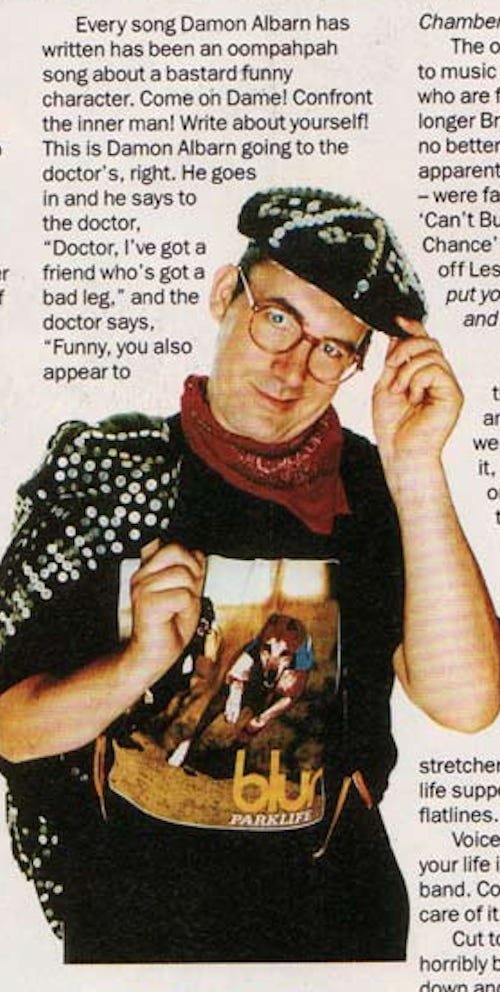
This week in a broadsheet review of a show I worked on, I was described as “a much-loved veteran”. My first reaction to these well-intended words was “how dare they call me ‘much-loved’?” Because the part about being a veteran cannot be denied. I am a veteran. If there was a sort of Armistice Day for writers, I’d be down the front in a beret and a blazer holding a big wreath with RIP SATURDAY ZOO written on it in big wobbly florist’s felt pen. I’ve been a writer for decades now: I’ve written everything from novels to speeches, movie scripts to quiz books, and sketches to underpants.
That’s right! Underpants. In the mid-1980s I was asked by Spitting Image to write some jokes that could be put on boxer shorts. I sent them pages of terrible gags and they used one of them. It was about Ben Elton and I pray God nobody ever finds a pair of the shorts the joke is on.
(I would like to find the first sketch I had on Spitting Image, however. It was about Ronald Reagan’s friendship with President Marcos and the punchline was “Let’s hope he doesn’t find out about the Manila envelopes.” A classic.)
I also wrote a lot of music journalism: I was at the NME in the 80s for indie and C86, baggy and Madchester. In the 1990s I was at Select for Britpop (see photo). And I was there for Mojo and Uncut and the rise of the heritage rock mag. But the NME was my freelance home for nearly 15 years. I was there so long that the Manic Street Preachers called me “Grandfather Time” (the Pet Shop Boys called me “Daisy Quantock”, look it up).
Being a writer for a long time – being anything for a long time - is weird because you start off with a lot of feelings like hope, excitement, impatience but also there’s terror. How are you going to make a living out of this? How will you manage if you don’t get regular work (I used to envy my staff colleagues who not only got wages but also expenses and hurtled round London in taxis)? And scariest of all, how long can I keep doing this? Because when I started out, the idea of a rock writer in their 30s was unknown. Who cares what a 30 year old thinks about new music? I was terrified: I was 22 and my writing career would be over in eight years (As it turned out, ageing rock writers were fine. Q Magazine came along and scooped them all up like a minibus on a day out from the care home. Everyone I knew from 1980s NME (including me) went on to Q, and thence to Mojo and so on).
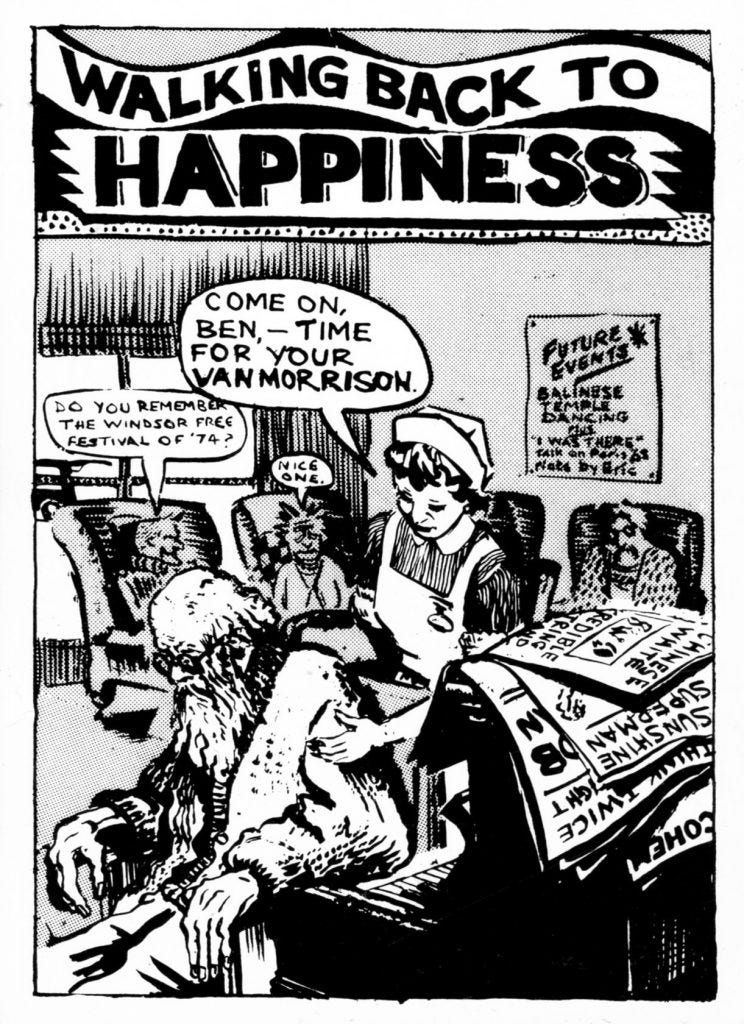
I started writing comedy. I was terrible at it (the Ben Elton joke was a high point). But then I met Steven Wells, who invited me to write a column with him (“You’re the only other person here who’s not totally shit” was I think his opening line). Armando Iannucci saw the column, and invited us to write for On the Hour and later The Day Today: and that was it. I wrote with Jane Bussmann for Chris Morris’ Jam and Brass Eye, and I wrote my own shows for radio, and now here I am, looking at the brilliant write-ups for Rosie Hoilt’s amazing Crossing The Floor, and being delighted.
“Much-loved”, though…
Thoughtful take on aging in creative fields. The whole terror of timing yourself out at 30 really captures how arbitrary career expiration dates can feel when you're starting. I hit a similar wall in tech consulting where mid-30s was considered "too senior" for certain gigs but "not experienced enugh" for others. The Manic Street Preachers nicknaming thing is pretty great tho.
Out of interest, who do you think is still buying the likes of Mojo and Uncut? I get them as part of a digital magazine subscription (free through the local library!) and take an occasional look. I grew up with the NME, the Face, Q, The Word and others, and loved ‘em all, but even to me, who must be prime target audience, they seem excruciatingly dull and pointless…