For All Mankind with Pencils
Star City, Soviet Chic and Sexy Communism

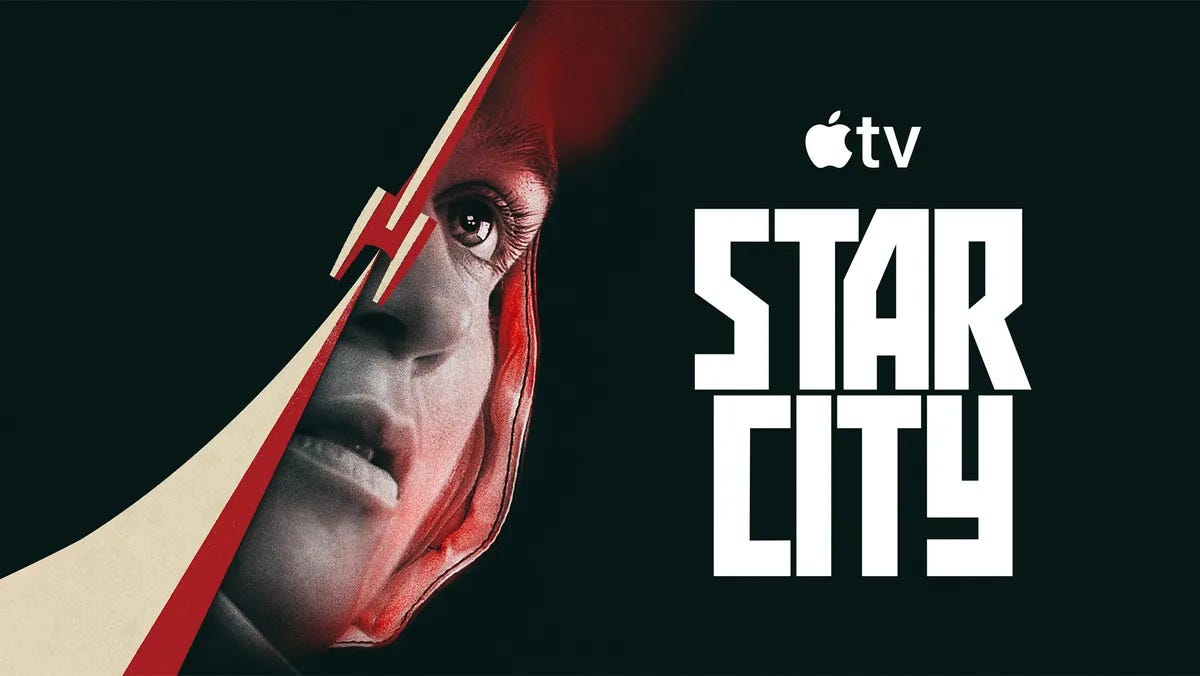
I’m watching Star City on Apple TV and it’s brilliant: the dark flipside of the much more gung-ho For All Mankind where the shiny boosting of Apollo and beyond is replaced by the grim oppressiveness of life in the USSR. It’s a great show, and it makes me very happy because for most of my life I’ve been mildly obsessed with the Soviet space programme. There’s something brilliantly home-made about it: the returning capsules that don’t splash down on sunny mornings in the Pacific Ocean but hurtle down to land on the remote plains of Kazakhstan: the curious mixture of military competition mixed up with the apparent idealism of the Soviet dream: and the pencils story.
You may know this one: it’s been debunked a few times but it still contains the essence of how people saw the space race in terms of its competitors. In brief, it goes like this: the Americans spent millions of dollars designing a pen that would write in space, but the Russians just took pencils. It’s funny because it’s true, even if it isn’t: the Soviet space programme has a romance that the Apollo missions somehow lack: and Star City is For All Mankind with pencils. Yes, there’s oppression in the form of Anna Maxwell Martin as Glenda Jackson channelling Rosa Klebb, but there’s also Rhys Ifans as the Great Designer Sergei Korolev, an idealist and a human being. And it’s that dynamic, that contrast, that makes Star City real.
There was a time, long before Putin and the oligarchs, when somehow the USSR managed to be a place of romance for Westerners. It was odd: even though most of us knew that the Soviet Union was an evil place ruled by mass murderers and repressive tyrants, there was still something attractive about it. Partly it was the appeal of the other - the uniforms! the brutalist apartment blocks! the retro phones! the badges! (Especially the badges: this was a time, it felt like, when every clod had a silver Lenin).

There was the fact that the Soviet Union wasn’t America, it wasn’t a great capitalist monolith of gum-chewing coke-drinking Vietnam-warring consumerism. It was of course a different kind of monolith: but with a kind of “my enemy’s enemy is my friend” logic, the USSR was OK because it wasn’t the USA (or the UK: see our fascination with traitors like Kim Philby, Guy Burgess and Anthony Blunt).
This notion – that the Soviet Union was cool – ran deep. Nazi chic was far from acceptable (then) but Soviet chic was everywhere, particularly in music.
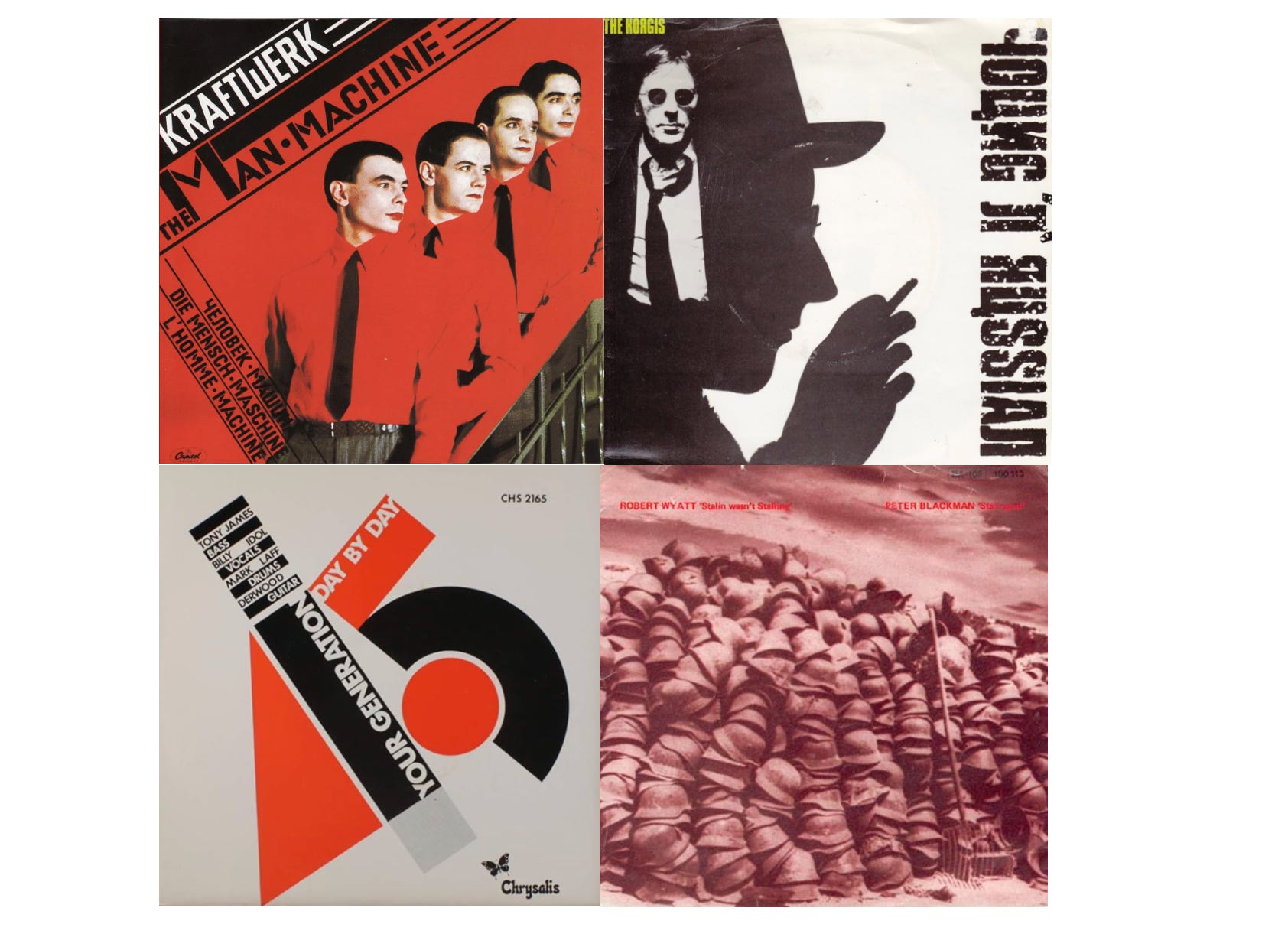
From the influence of El Lissitzky on record sleeves to pop’s obsession with the Cold War and the threat of nuclear annihilation, it sometimes seemed that everyone was backing the USSR. Not everyone was as romantic as Fred Kite, Peter Sellers’ shop steward from the film I’m All Right Jack with his wistful, “Ahhh, Russia. All them corn fields and ballet in the evening” but the Russians, if wrong, were also romantic.

Then it all came down and now, as someone said about something else, there’s all this. The USSR is Russia now, and its supporters are a grim crew. But the romance is still out there, maybe orbiting the Moon, and some people still dream of a different word, a world where the skies are bright with names like Soyuz and Vostok.
In 2013, Valentina Tereshkova, the first woman in space, told reporters that she would love to go to Mars, even if it was a one way trip. “I am ready,” she said. This statement affected me so much that I wrote a film about it, with Rebecca Front as Valentina, directed by John Panton, art by Moose Allain and music by Martin Carr.
Some dreams never end:
You’re young and Russian, in your furry hat. You’re young and Russian, baby, that’s where it’s at.
Loved this. Learned so much from those pesky, cultured Russians, from literature to music and art.